[Caso 01]
Cambiando la forma en la que la gente organiza sus viajes
Viajes
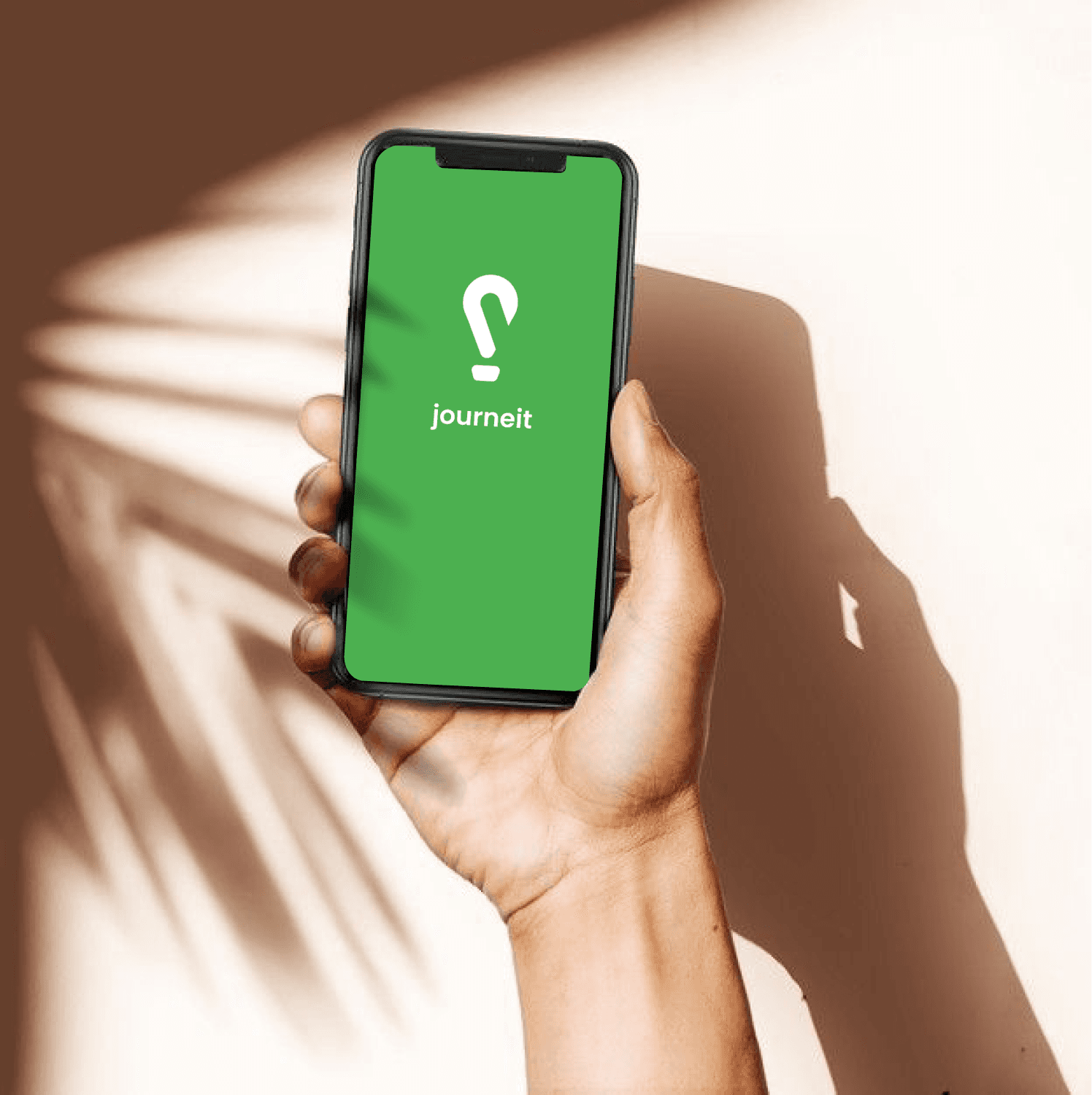
Journeit
Simplifying Travel Planning Through One Unified App
[Resumen del proyecto]
Ante las fricciones en el proceso de planificación de viajes, diseñé Journeit como una solución centrada en el usuario para simplificar la forma en que las personas descubren, organizan y viven sus viajes. A través de investigación y análisis de comportamiento, identifiqué puntos de dolor clave relacionados con la sobrecarga de información y la falta de estructura, y los traduje en un flujo de producto claro e intuitivo.
[Planteamiento del problema]
Como producto conceptual, Journeit fue diseñado para resolver un problema común en la planificación de viajes: la información dispersa entre múltiples plataformas, notas y pestañas. La investigación y el análisis competitivo revelaron cómo los itinerarios fragmentados, confirmaciones, mapas y recordatorios generan sobrecarga cognitiva y reducen la claridad durante todo el viaje.
Journeit propone una experiencia centralizada en una única interfaz, donde toda la información esencial del viaje se organiza en un espacio estructurado y accesible. Al priorizar la claridad, la jerarquía visual y la usabilidad en móvil, el proyecto transforma una planificación caótica en una experiencia más tranquila, ordenada y sin fricciones.
[Sector]
Viajes
[Mi Rol]
Product Designer
[Plataformas]
Ordenador y Móvil
[Timeline]
Enero 2024 - Marzo 2024
[Persona]

Jhon Roberts
Marketing Consultant
Edad: 29
Lugar: Barcelona
Tech Proficiency: High
Género: Male
[Objetivo]
Mantener toda la información del viaje en un único lugar claro y accesible.
Tener una visión estructurada de cada día sin perder flexibilidad.
Reducir el estrés durante el viaje evitando búsquedas de última hora.
[Frustraciones]
Saltar entre aplicaciones para encontrar reservas o confirmaciones.
Perder detalles importantes entre hilos de correo o capturas de pantalla.
Herramientas de planificación sobrecargadas con funcionalidades innecesarias.
[Proceso]
[01] User Research
Realicé una encuesta para comprender qué buscan los usuarios al organizar un viaje.
Realicé un análisis comparativo de competidores para identificar buenas prácticas y problemas de usabilidad comunes en plataformas existentes de planificación de viajes.
Realicé entrevistas a cinco usuarios para comprender sus frustraciones, comportamientos y preferencias a la hora de planificar viajes.
[02] Insights
Los viajeros tienen dificultades debido a la información fragmentada entre correos electrónicos, aplicaciones y notas, lo que dificulta la gestión de la planificación del viaje.
Los usuarios necesitan acceso rápido y sencillo a la información esencial del viaje, especialmente desde dispositivos móviles durante el propio viaje.
Los viajeros prefieren herramientas claras y sencillas que ofrezcan una visión estructurada de todo su viaje en un único lugar.
[03] Design Solution
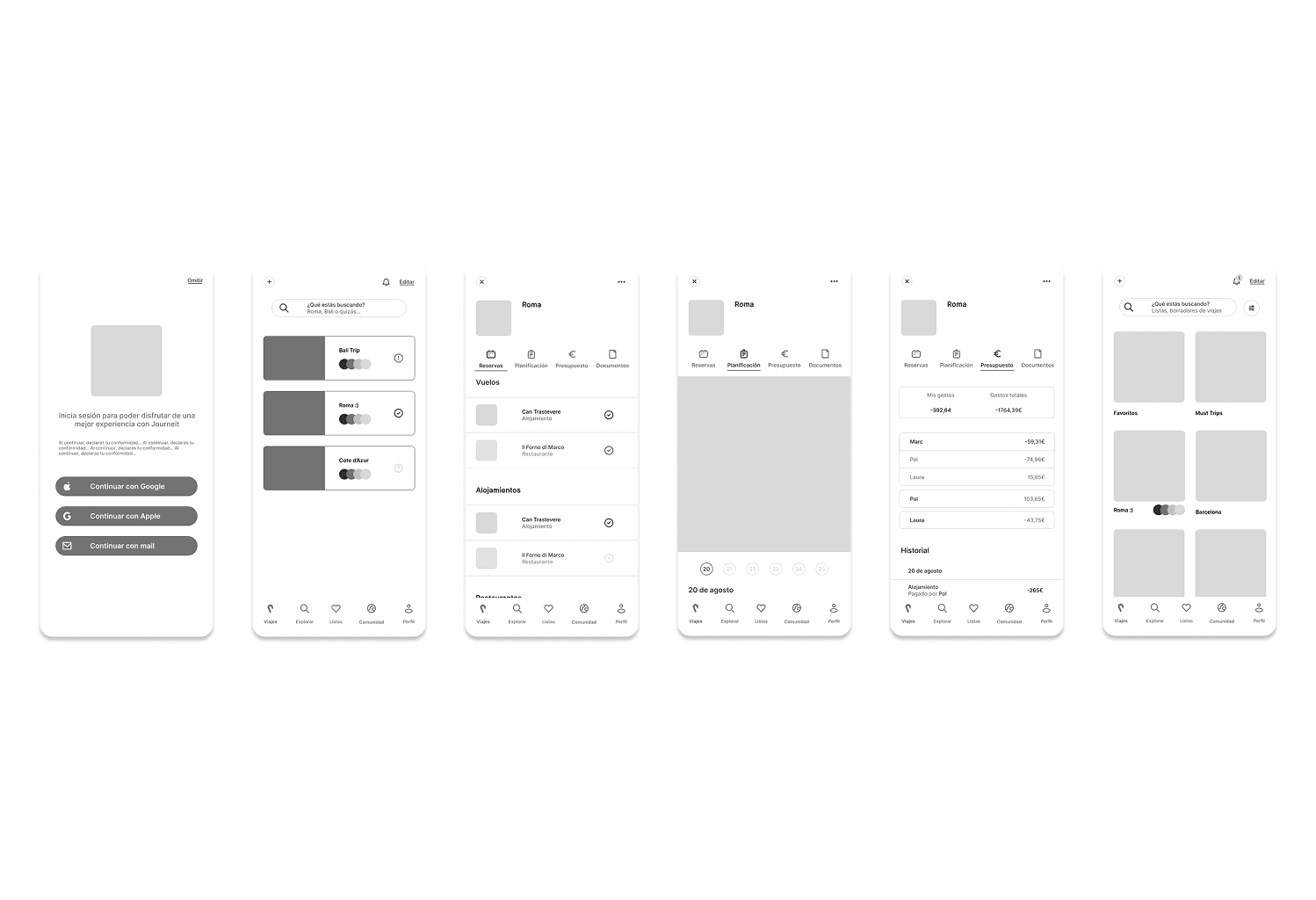
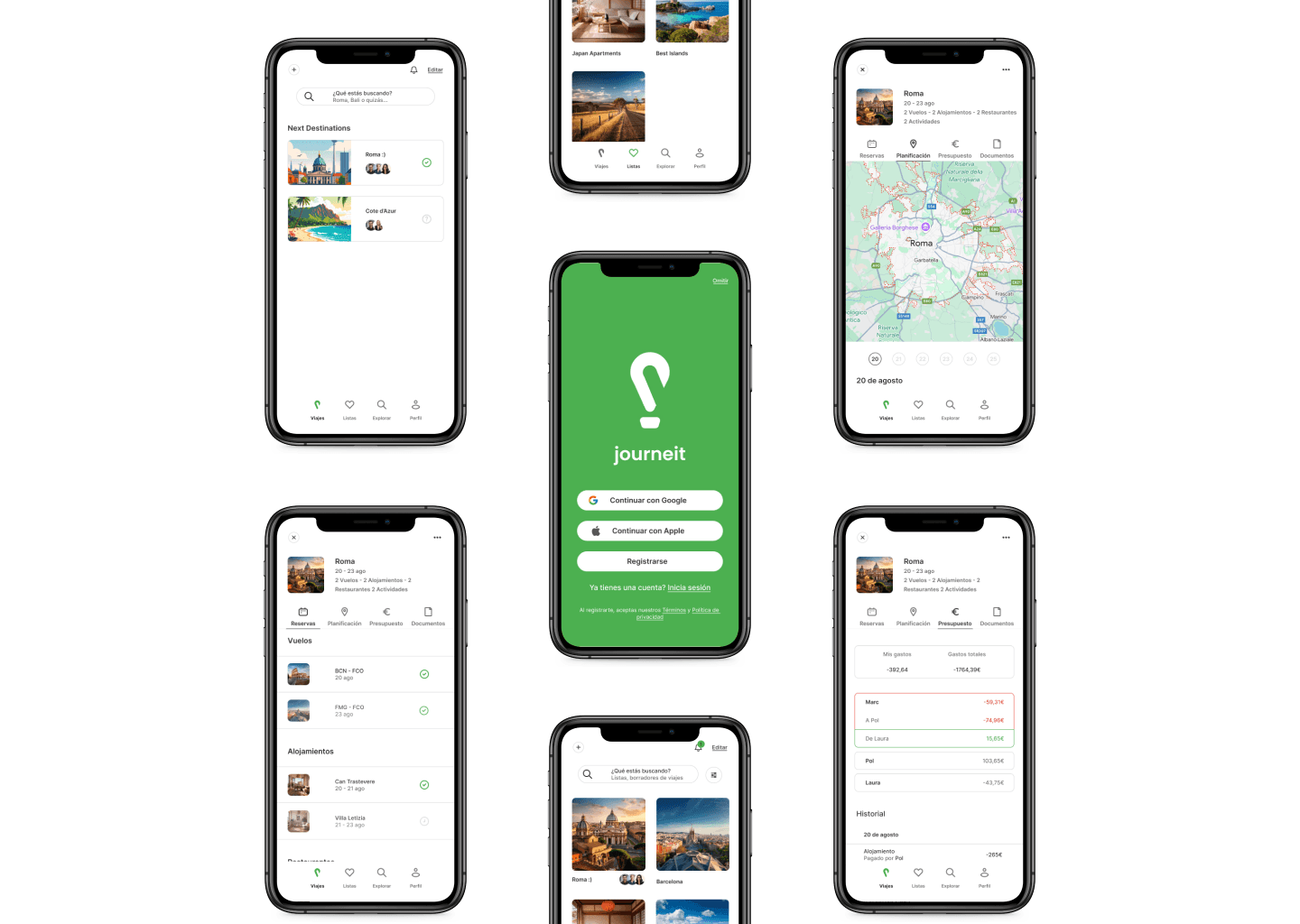
Panel de viaje centralizado que reúne toda la información del viaje — itinerario, ubicaciones, notas y reservas — en una única vista estructurada.
Interfaz mobile-first diseñada para un acceso rápido a los detalles clave del viaje durante el desplazamiento.
Jerarquía visual clara y diseño simplificado para reducir la carga cognitiva y facilitar la lectura y comprensión de la información del viaje.
[04] Testing & Iteration
Pruebas de usabilidad con usuarios objetivo para evaluar la facilidad con la que podían organizar y acceder a la información del viaje dentro de la interfaz.
Mejoras de diseño iterativas basadas en feedback para simplificar la navegación y mejorar la claridad de la información.
Optimización del layout y del flujo de interacción para garantizar un acceso más rápido a los detalles clave del viaje y una experiencia de usuario más intuitiva.
[Resultado]
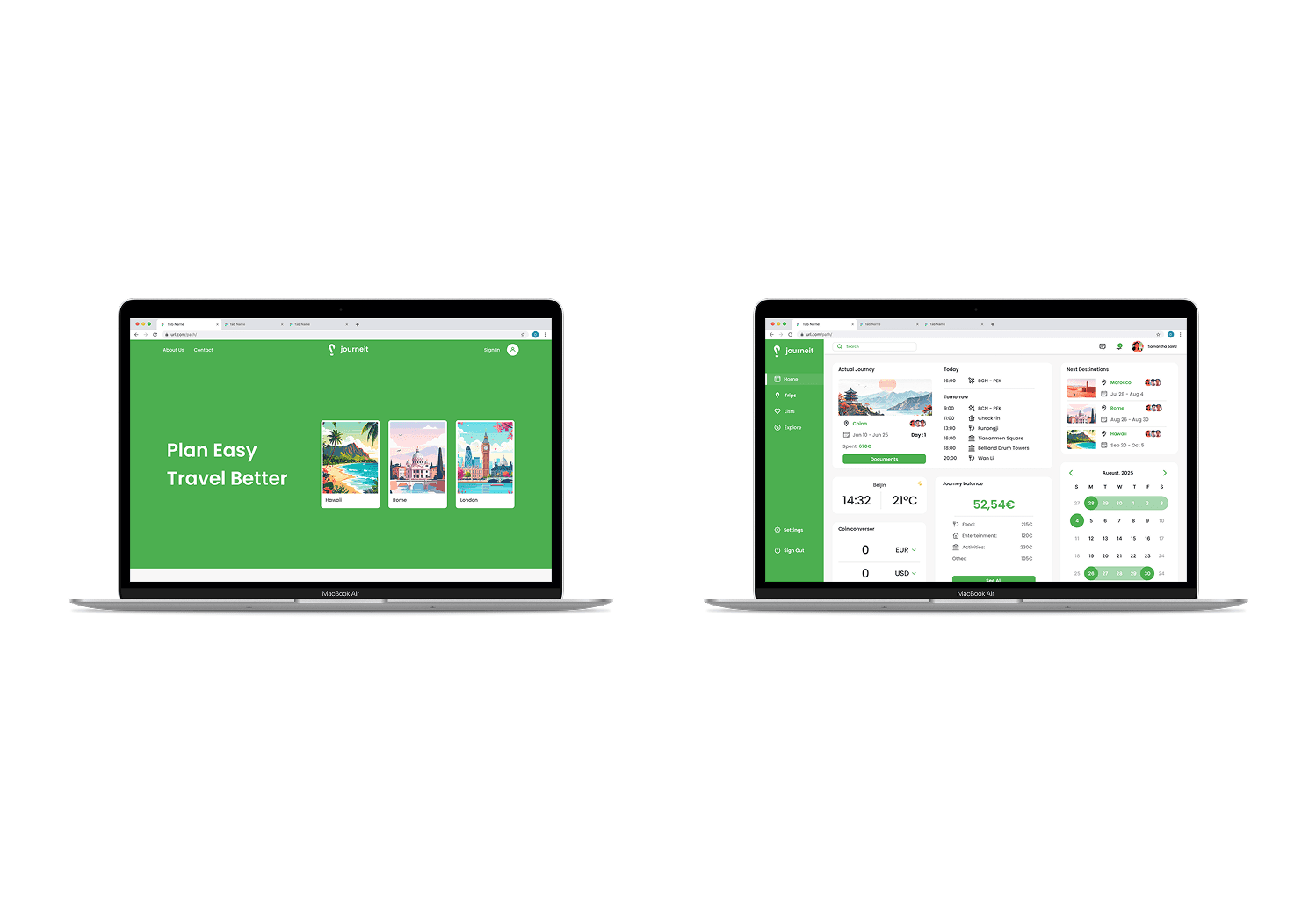
Una experiencia de planificación de viajes más clara y estructurada que centraliza toda la información del viaje en un único lugar.
Reducción de la carga cognitiva del usuario al simplificar la organización y el acceso a la información del viaje.
Interfaz mobile-friendly que permite a los viajeros consultar rápidamente la información esencial del viaje durante el desplazamiento.
[Key Learnings]
La simplicidad mejora la usabilidad.
Reducir funcionalidades innecesarias ayuda a los usuarios a centrarse en lo que realmente importa al organizar un viaje.
La estructura de la información es fundamental.
Una jerarquía clara y una buena organización mejoran significativamente la forma en que los usuarios comprenden y navegan la información del viaje.
El contexto móvil condiciona el diseño.
Dado que la mayor parte de la información del viaje se consulta en movimiento, la usabilidad en móvil debe ser una prioridad central en el diseño.
[Case 01]
Changing the way people organize their trips
Travel
Journeit
Simplifying Travel Planning Through One Unified App
[Project Overview]
Faced with friction in the travel planning process, I designed Journeit as a focused, user-centered solution to simplify how people discover, organize, and experience their trips. Through research and behavioral insights, I identified key pain points around information overload and lack of structure, then translated them into a clear, intuitive product flow.
[Problem Statement]
As a conceptual product, Journeit was designed to solve a common travel planning challenge: scattered information across multiple platforms, notes, and tabs. Research and competitive analysis revealed how fragmented itineraries, confirmations, maps, and reminders create cognitive overload and reduce clarity throughout the trip.
Journeit proposes a centralized, single-page experience where all essential travel information lives in one structured, accessible space. By prioritizing clarity, hierarchy, and mobile usability, the project transforms chaotic planning into a calm, organized, and frictionless journey.
[Industry]
Travel
[My Role]
Product Designer
[Platforms]
Desktop and Mobile
[Timeline]
January 2024- March 2024
[Persona]
Jhon Roberts
Marketing Consultant
Age: 29
Location: Barcelona
Tech Proficiency: High
Gender: Male
[Goal]
Keep all trip-related information in one clear, accessible place
Have a structured overview of each day without losing flexibility
Reduce stress during travel by avoiding last-minute searches
[Frustrations]
Jumping between apps to find bookings or confirmations
Losing important details in email threads or screenshots
Overcomplicated planning tools with unnecessary features
[Process]
[01] User Research
Conducted a survey to understand what users look for when organizing a trip.
Conducted a competitor benchmark to identify best practices and common usability issues in existing travel planning platforms.
Conducted user interviews with five participants to understand their frustrations, behaviors, and preferences when planning trips.
[02] Insights
Travelers struggle with fragmented information spread across emails, apps, and notes, making trip planning difficult to manage.
Users need quick and simple access to essential trip details, especially from their mobile devices while traveling.
Travelers prefer clear and simple tools that provide a structured overview of their entire trip in one place.
[03] Design Solution
Centralized trip dashboard that consolidates all travel information — itinerary, locations, notes, and reservations — into a single structured view.
Mobile-first interface designed for quick access to key trip details while traveling.
Clear visual hierarchy and simplified layout to reduce cognitive load and make trip information easy to scan and understand.
[04] Testing & Iteration
Usability testing with target users to evaluate how easily they could organize and access trip information within the interface.
Iterative design improvements based on feedback to simplify navigation and improve information clarity.
Refinement of the layout and interaction flow to ensure faster access to key trip details and a more intuitive user experience.
[Outcome]
A clearer and more structured travel planning experience that centralizes all trip information in one place.
Reduced cognitive load for users by simplifying how travel details are organized and accessed.
A mobile-friendly interface that allows travelers to quickly view essential trip information while on the move.
[Key Learnings]
Simplicity improves usability
Reducing unnecessary features helps users focus on what truly matters when organizing a trip.
Information structure is critical
Clear hierarchy and organization significantly improve how users understand and navigate travel details.
Mobile context shapes design
Since most trip information is accessed on the go, mobile usability must be a core design priority.
[Case 01]
Changing the way people organize their trips
Travel
Journeit
Simplifying Travel Planning Through One Unified App
[Project Overview]
Faced with friction in the travel planning process, I designed Journeit as a focused, user-centered solution to simplify how people discover, organize, and experience their trips. Through research and behavioral insights, I identified key pain points around information overload and lack of structure, then translated them into a clear, intuitive product flow.
[Problem Statement]
As a conceptual product, Journeit was designed to solve a common travel planning challenge: scattered information across multiple platforms, notes, and tabs. Research and competitive analysis revealed how fragmented itineraries, confirmations, maps, and reminders create cognitive overload and reduce clarity throughout the trip.
Journeit proposes a centralized, single-page experience where all essential travel information lives in one structured, accessible space. By prioritizing clarity, hierarchy, and mobile usability, the project transforms chaotic planning into a calm, organized, and frictionless journey.
[Industry]
Travel
[My Role]
Product Designer
[Platforms]
Desktop and Mobile
[Timeline]
January 2024- March 2024
[Persona]
Jhon Roberts
Marketing Consultant
Age: 29
Location: Barcelona
Tech Proficiency: High
Gender: Male
[Goal]
Keep all trip-related information in one clear, accessible place
Have a structured overview of each day without losing flexibility
Reduce stress during travel by avoiding last-minute searches
[Frustrations]
Jumping between apps to find bookings or confirmations
Losing important details in email threads or screenshots
Overcomplicated planning tools with unnecessary features
[Process]
[01] User Research
Conducted a survey to understand what users look for when organizing a trip.
Conducted a competitor benchmark to identify best practices and common usability issues in existing travel planning platforms.
Conducted user interviews with five participants to understand their frustrations, behaviors, and preferences when planning trips.
[02] Insights
Travelers struggle with fragmented information spread across emails, apps, and notes, making trip planning difficult to manage.
Users need quick and simple access to essential trip details, especially from their mobile devices while traveling.
Travelers prefer clear and simple tools that provide a structured overview of their entire trip in one place.
[03] Design Solution
Centralized trip dashboard that consolidates all travel information — itinerary, locations, notes, and reservations — into a single structured view.
Mobile-first interface designed for quick access to key trip details while traveling.
Clear visual hierarchy and simplified layout to reduce cognitive load and make trip information easy to scan and understand.
[04] Testing & Iteration
Usability testing with target users to evaluate how easily they could organize and access trip information within the interface.
Iterative design improvements based on feedback to simplify navigation and improve information clarity.
Refinement of the layout and interaction flow to ensure faster access to key trip details and a more intuitive user experience.
[Outcome]
A clearer and more structured travel planning experience that centralizes all trip information in one place.
Reduced cognitive load for users by simplifying how travel details are organized and accessed.
A mobile-friendly interface that allows travelers to quickly view essential trip information while on the move.
[Key Learnings]
Simplicity improves usability
Reducing unnecessary features helps users focus on what truly matters when organizing a trip.
Information structure is critical
Clear hierarchy and organization significantly improve how users understand and navigate travel details.
Mobile context shapes design
Since most trip information is accessed on the go, mobile usability must be a core design priority.